
(2023) Disclaimer and Notes: This article is for the purpose of providing an approach and some ideas for the structure and methods that could be used to assist and support police and/or military agencies developing peer support and resiliency programs. This is a fairly new and emerging area of police and military science. The intent here is to provide ideas and potential approaches, as opposed to doctrine or policy guidelines. I am more than happy to discuss and provide further insight and support as needed or requested.
Warrior Life Groups: Building Proactive Mental and Emotional Resilience While Healing from Extreme Violence and Prolonged Stress
Establishing a law enforcement focused psychotherapy group emphasizing prolonged stress, with goals toward healing and proactive resilience building will require significant pre-planning on the part of the group leader. Unlike the psychoeducational approach, this group will focus on a small group of members who have some level of pre-existing circumstances, likely defined by agency, assignment, rank, and years on the job. Self-disclosure will be fundamental to the groups’ ethos and culture, as these stories, memories, and experiences, will validate each member to the others, and provide a basis for discussion, openness, and the development of a willingness to participate in exercises designed to heal and establish a lasting baseline for personal homeostasis. Mental, emotional, and psychological tools for law enforcement personnel are just as important, perhaps, more important than the kinetic tools designed to support a reactive, rather than proactive mind.
Psychotherapy Versus Psychoeducational Group
This psychotherapy group will differ greatly from a similar approach using a psychoeducational format. This group is rooted in pastoral (chaplaincy) counseling and established peer support theory and approach. These approaches differ from state to state and will be assessed and applied during pre-planning. Member candidates will be screened for individual experience with traumatic events and their willingness to share their experiences with others. While there is a similarity in that some information will be shared to help educate group members, the focus of the group will be individual and group healing and strengthening personal resilience.
Self-disclosure will be addressed in the pre-screening process for group composition. Yalom and Leszcz (2020) address this in context when they stated,
Self-disclosure is always an interpersonal act. What is important is not that one discloses oneself but that one discloses something important in the context of a relationship to others. The act of self-disclosure takes on real importance because of its implications for the nature of ongoing relationships; even more important than the actual unburdening of oneself is the fact that disclosure results in a deeper, richer, and more complex relationship with others (p. 174).
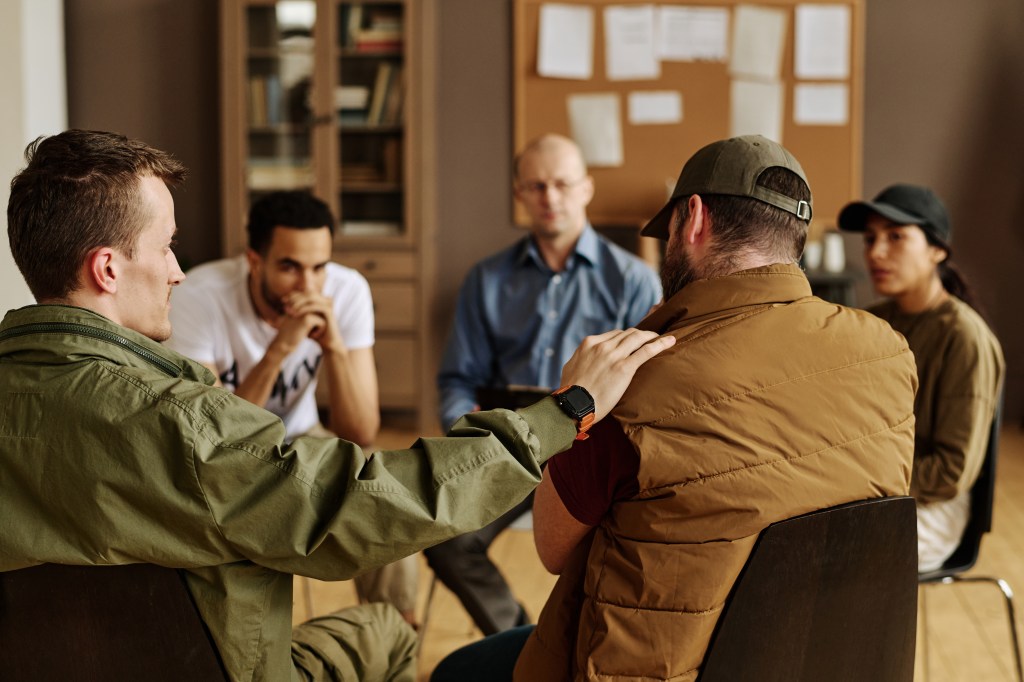
The success of this psychotherapy group will rest on the foundation of individual self-disclosure. Given the nature and culture of the police profession, this approach has a strong implication for organizational and individual culture change, while also establishing tools that will create individual and organizational resiliency. Members will learn methods of mindfulness to help them build emotional resiliency but will also participate in group engagement designed to promote and enhance healing.
Group Composition
Composition would best be served by having a small group of approximately eight to ten individuals with more than ten years of experience. This group, being specific to law enforcement will require officers to be from the same agency or within a reasonable distance and surrounding agencies. This will ensure agency and community cultures are foundational to establishing cultural credibility and relational connections. This model may also apply to similar military focused psychotherapy groups with the same goals and objectives.
Additionally, group composition will be enhanced by members having similar historical assignments and experiences. Gender may even play a key role in group success. For instance, a small group of approximately eight female agents who have all worked narcotics and/or vice operations will share similar experiences that will differ from their male counterparts. A willingness to self-disclose may be enhanced through the similar demographic and assignment factors as stated. Each group will be different, having its own culture and identity.
Group Goals and Objectives
There are two goals, each having subsets of two objectives. The primary aspect of each goal is stated in the first paragraph of each goal, with the same being true for each objective. Both goals and objectives are provided additional explanations and support. This provides the member and the group leader additional insight and confidence in the group approach and toward achievement of stated goals and objectives. Each group depending on the demographics and specific pre-planning elements will experience varying process and cultural developments. This can be specific and intentional for group leaders planning for agencies, jurisdictions, regions, and even task-force support.
Goal One: Mapping a Personal Plan for Healing
Each group member will begin by “mapping” a personal pathway to achieving emotional balance (homeostasis). This process will include journaling and establishing several levels of self-evaluation and will be led through peer support coaching techniques.
All members will develop a basic understanding of the brain and body as it relates to stress and how he or she can begin a new pathway toward developing homeostasis and what this means in terms of mindfulness and personal healing. Some discussion will take place concerning the brain, and specifically concerning the overstimulation of the amygdala and the special relationship it shares with the medial prefrontal cortex (Van der Kolk, 2015). Leading members to personal balance and creating pathways for members to move from present, or the “here and now” (Yalom and Leszcz, 2020, p. 217), to a better contextual thought process (Everly and Reese, 2007) promoting healing and future emotional resiliency defines success for this goal and its subsequent objectives.
Objective One: Recognizing Personal Signs and Symptoms
Establish an accurate understanding of the signs and symptoms of stress injuries and the onset or presence of PTSD in members. Each member will journal personal identification of signs and symptoms relevant to their own experience.
An emphasis will be provided to be specific and transparent in self-assessments. Stress injuries may or may not include PTSD and it becomes increasingly important with emerging literature to identify specific issues and create effort individually toward the objective of accurately understanding one’s personal level of emotional and psychological fitness. For example, consider that concerning burnout (BO),
Previous studies have found that as many as one-third of police officers display symptoms of BO and nearly one-half display high depersonalization scores and that these outcomes exceeded other emergency responders like firefighters or ambulance staff. This is in line with previous research that has shown PTSD, BO, and especially depersonalization and emotional exhaustion, to be strongly linked, suggesting that police officers may also have higher BO rates than in other careers (Anders et al., 2022).
The extraordinarily high numbers associated with law enforcement burnout (Anders et al., 2022) and even higher numbers related to depersonalization (Anders et al., 2022) should be signaling additional underlying factors within the profession. The group will discuss this and as a matter of this objective, work toward identifying and defining factors that may contribute to these emotional injuries.
Objective Two: Identifying Pathways to Resiliency Resources
“Stressful and traumatic life events are common and are associated with several psychiatric diagnoses” (Karatzias, et al. 2022). A network of professionals will be accessible to all group members. Based on group engagement and the personal identification of signs and symptoms, members will be provided confidential access to clinical and non-clinical resources as needed. It is worth noting that many officers are labeled with PTSD, when in fact, there may be other or even multiple other factors or diagnoses that may be more appropriate for subsequent therapy.
The ICD-11 includes a new grouping for “disorders specifically associated with stress” that contains revised descriptions of post-traumatic stress disorder (PTSD: PB40) and adjustment disorder (AjD: PB43) and new diagnoses in the form of complex PTSD (CPTSD: PB41) and prolonged grief disorder (PGD: PB42). These disorders are similar in that they each require the occurrence of a life event for the consideration of a diagnosis (Karatzias, et al. 2022).
Goal Two: Mindfulness and Resiliency Development
Members will be provided with several skills and approaches to implementing mindfulness techniques into their daily lives. Establishing these tools as they relate to the individual’s personal plan development will provide a basis for development of resiliency, emotional fitness, and healing from experienced traumatic events. Members will practice these skills together during each group. This will also provide validation to members for discussion and socializing acceptance of approaches. This is especially an important cultural implication for male tactical personnel.
Mindfulness is an emerging area of interest in targeting stress in the life of law enforcement professionals. There is not enough research currently to provide conclusive data (Kaplan et. al., 2017). However, there is data that strongly suggests that police officers who engage with various mindfulness techniques such as meditation (eastern or Biblical), yoga (Note: This group leader does not support or advocate eastern yoga or meditation, but the data suggests positive aspects of these practices, as stated.), religious practices (such as praise and/or prayer), walking, exercise, and or other approaches where mindfulness is combined, receive significant benefits and healing.

Objective One: Identify Personal Stressors
Each group member will identify issues and difficulties he or she experiences at work and life. Some will want to discuss issues at home and other issues that may be contributing to work-related problems. This is acceptable within reason. The group leader will need to pay close attention to the dynamics shaping the process and culture of the group. Equally, the progress of group stages will become apparent as this objective is pursued. The maturing of the group (Yalom and Leszcz, 2020, pp. 378-379) should remain a consideration as individuals share their stories and identify to the group some of their key stress points.
Objective Two: Changing the Narrative
Each member will work through with the group a better way to communicate about these stress-functions operating in their personal and work lives. Essentially, each member will journal to help them express a different approach to identifying, mitigating, and healing from stress injuries they may have received on the job and/or from adjacent parts of their lives.
Mindfulness plays a key role in this transformation of thinking. Everly and Reese (2007) stated,
The answer we believe is that most of the stress in your life comes about because of how you view the people, places, and things in the world around you. The meanings that you assign to these things are the essential determinants of your happiness, and even your effectiveness as an emergency responder, a spouse, or a parent (p. 5).
Time will be spent in group sessions helping members to redefine how “stressors” (Romero et al., 2009) are perceived and identified by the member. Discussions with other members will help each individual identify and tailor these new life narratives.
Group Setting and Structure
The location and settings for this group need to be informal and comfortable for all. Privacy will be important, as much of the discussions will include personal and private information. Discussions will also likely contain information that is either confidential or law enforcement sensitive. Classified information should not be discussed or revealed in group sessions. If this becomes problematic, the members and group leader will need to address this matter with agency and command structure, as appropriate. Proper clearances will need to be screened and issued and the group leader will need to be properly briefed by command and the proper authorities controlling protected information. It is possible that missions, cases, or assignments will require this extra step. If group leaders can identify these needs prior to group commencement, this will help to ensure the continuity and stability of the group continuing sessions on time and synchronously.

Beverages and snack-style food may be served and even encouraged through members bringing or participating in providing these items. A “cook-out” or BBQ may well be within the scope of the group, as culturally, this format works well for law enforcement and military after-work events. Meetings may rotate or be held in the homes of group members, community centers, or churches. It is suggested that meetings not be held at the department or agency building of participants. This will restrict participation and sharing to some degree. Members should be made to feel safe and that their thoughts, comments, and sharing of information will be held in confidence by all members and the group leader.
The matter of confidence should be addressed by the group leader in both pre-planning and once the group starts. The confidentiality of the session differs to some degree from the statutory requirements of a peer support session. However, for the group to become successful, trust must be established, and on-going confidentiality must be a reality rather than a perception. Group leaders can help to ensure this reminder at each group meeting, as well as model this level of behavior and discipline as the group progresses.
Guidelines for Group Members
Timeliness is crucial for group continuity and confidence. Tardiness should not be allowed more than once before a member is asked to leave. Rank, uniforms, and weapons will not be needed or allowed in the group. Venting, cursing, and/or confrontation will be kept to a minimum and will be controlled by the group leader. The nature of the setting will have a direct impact on the group members’ attitude and willingness to participate. There should not be heavily restrictive guidelines on members. This will require a strong and experienced group leader.
Group Leader Role and Function
The group leader role and function are straight forward, as this group approach will involve mature and experienced personnel who will come already knowing how to lead and with significant experience. The group leader must allow his or her experience, education, and training to lead and to guide. Participation should be with an emphasis on contributing elements of information that provide validation of the leader’s credentials and experience so that order and stage development may be maintained (Yalom and Leszcz, 2020, pp. 378-379). Modeling and technical expertise (Yalom and Leszcz, 2020, pp. 160-167) will be important to keep continuity and flow of discussions moving. However, the group leader will by necessity need to remain an empathetic resource and inspiration to change, rather than a direct participant.
Conclusion
“Police officers with PTSD displayed lower cognitive performance across several domains, notably executive functioning, verbal learning, and memory” (Desrochers et al., 2021). While it seems logical to focus efforts on PTSD as it relates to the law enforcement profession, there are numerous reasons to explore other rooted causalities such as developmental trauma disorder (DTD) as a potential antecedent to PTSD in an officer (Spinazzola et al., 2018).
The experienced group leader will be able to discern the validity and accuracy of individual self-disclosures by members. Helping members to balance these participatory disclosures, while enabling them to actively listen and support others will generally result in positive outcomes. Emergence of clinical matters may also be referred to the appropriate clinical or specialized resources.
Mindfulness may involve some, if not many of these conditional factors and possibly contribute to future thinking and change that may enhance both community safety and security, as well as the quality of life for police professionals. Mindfulness is proving to be an emerging and valuable tool in the arsenal of the law enforcement profession (Kaplan et. al., 2017).
Identifying burnout and other stress injuries before they contribute, or they transform into post-traumatic stress implications may become a pathway to developing proactive strategies and tactics relevant to prevention over treatment.
Ambiguity remains a significant negative factor in organizational and community skills and abilities designed to identify, engage, mitigate, and treat the signs and symptoms of police stress. Concerning ambiguity regarding stress,
Part of the problem of defining “stress” is addressed by referring to the stimuli as stressors, the emergency responses as the stress response, and the over-stimulation of the emergency responses as chronic stress. Chronic stress is then associated with an increased risk of stress-related disease and pathology. However, most uses of the word “stress” remain ambiguous (Romero et al., 2009).
Helping officers and agencies to better define stress and how it is specifically related to the individual, occupation, and the community will lead to greater awareness and produce opportunity for healing and growth in the law enforcement profession, the professional, and in the communities, they protect and serve.
An additional concern and potential focal point for future research is the idea that these symptoms experienced daily by officers may be pointing to deeply underlying occupational hazardous conditions, behaviors, and circumstances. It appears that the data and research also point to community factors contributing to occupational stress in law enforcement personnel. Much research and work are still needed. While American culture will never experience a time where law enforcement is not needed as advocated by several misinformed social groups, it may be that occupational barriers and conditions could be modified to involve community counseling, pastoral care, relationship building, and other approaches to building strong relational ties between law enforcement and community constituents.
Warrior Life Groups may provide a basis for change and healing in both individual law enforcement professionals as well as their agencies and communities.

References
Anders, R., Willemin-Petignat, L., Salathé, C., Samson, A., & Putois, B. (2022). Profiling police forces against stress: risk and protective factors for post-traumatic stress disorder and burnout in police officers. International Journal of Environmental Research and Public Health, 19(15)https://doi.org/10.3390/ijerph19159218
Desrochers, A., Rouleau, I., Angehrn, A., Vasiliadis, H., Saumier, D., & Brunet, A. (2021). Trauma on duty: cognitive functioning in police officers with and without posttraumatic stress disorder (PTSD). European Journal of Psychotraumatology, 12(1)https://doi.org/10.1080/20008198.2021.1959117
Everly, G. S., & Reese, J. T. (2007). Psychological body armor: Seven strategic lessons about life, resiliency, and coping with stress. Chevron Pub. Corp.
Kaplan, J. B., Bergman, A. L., Christopher, M., Bowen, S., & Hunsinger, M. (2017). Role of resilience in mindfulness training for First Responders. Mindfulness, 8(5), 1373–1380. https://doi.org/10.1007/s12671-017-0713-2
Karatzias, T., Knefel, M., Maercker, A., Cloitre, M., Reed, G., Bryant, R., Ben-Ezra, M., Kazlauskas, E., Jowett, S., Shevlin, M., & Hyland, P. (2022). The network structure of ICD-11 disorders specifically associated with stress: adjustment disorder, prolonged grief disorder, posttraumatic stress disorder, and complex posttraumatic stress disorder. Psychopathology, https://doi.org/10.1159/000523825
Maglione, M., Chen, C., Bialas, A., Motala, A., Chang, J., Akinniranye, O., & Hempel, S. (2021). Combat and operational stress control interventions and PTSD: a systematic review and meta-analysis. Military Medicine, https://doi.org/10.1093/milmed/usab310
Romero, L. M., Dickens, M. J., & Cyr, N. E. (2009). The Reactive Scope Model — a new model integrating homeostasis, allostasis, and stress. Hormones and Behavior, 55(3), 375–389. https://doi.org/10.1016/j.yhbeh.2008.12.009
Spinazzola, J., van der Kolk, B., & Ford, J. D. (2018). When nowhere is safe: Interpersonal trauma and attachment adversity as antecedents of posttraumatic stress disorder and developmental trauma disorder. Journal of Traumatic Stress, 31(5), 631–642. https://doi.org/10.1002/jts.22320
Van der Kolk, B. (2015). The body keeps the score: Brain, mind and body in the healing of trauma. Penguin Books.
Yalom, I. D., & Leszcz, M. (2020). The theory and practice of group psychotherapy (6th ed.). Basic Books.
 CenturionXL Blog Development